Coil Academy / Troubleshooting
Repair or Replace an HVAC Coil?
How to distinguish a service problem from a damaged coil, and weigh repair, coil replacement, and replacement of the whole unit.
In this article10 sections
Start with the diagnosis
A coil problem does not automatically mean you need a new coil. Sometimes cleaning or another service correction is enough. Sometimes a localized repair is reasonable. When damage is extensive, or the surrounding material is deteriorating, replacing the coil may be the more dependable choice.
The useful starting question is what failed and how far the damage extends. A qualified HVAC technician’s diagnosis should guide that decision. This guide explains the considerations; it is not a procedure for opening, pressurizing, or repairing a coil.
First establish whether the coil itself has failed
A room that will not cool properly is a symptom. It is not a diagnosis. Before condemning a coil, the service team should check the conditions that let it work: airflow, controls, and the supply of refrigerant or water, as applicable. A sound coil cannot deliver the expected result when another part of the system is preventing normal operation.
Water around an air handler also needs investigation. A cooling coil normally collects condensation. Problems moving that water into and out of the drain pan can make the unit leak even when the coil’s internal passages are intact. The technician needs to distinguish escaping coil fluid from condensate that is not draining or being collected correctly.
Visible dirt and bent fins are another reason to pause before choosing replacement. Fins help transfer heat and provide passages for air. Cleaning and appropriate fin straightening may address serviceable surface problems; neither repairs a leaking tube or reverses extensive metal loss.
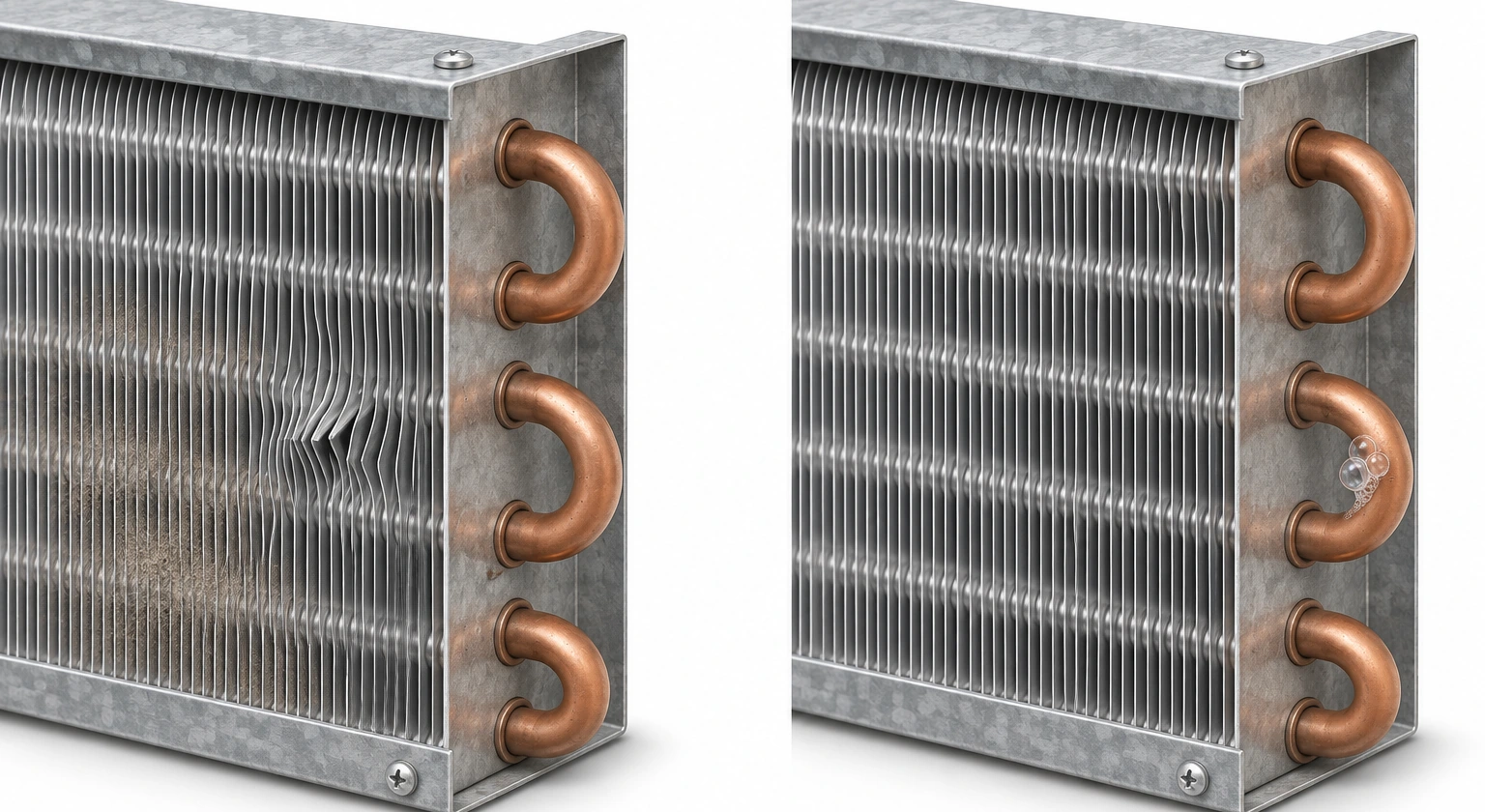
Cleaning and fin straightening address different problems from a tube repair. Illustrated leak-test bubbles indicate a located leak; ordinary condensation does not.
Understand the three different responses
Maintenance restores a serviceable coil or its operating conditions. Examples include cleaning accumulated debris, correcting a drainage issue, or repairing a control problem elsewhere in the system. Repair addresses a particular defect in the coil or its connections. Replacement removes the damaged coil and installs another one. These are different scopes of work, with different costs and expectations.
Think of the distinction like a window: washing dirty glass, repairing a damaged latch, and replacing a cracked pane solve different problems. The right choice depends on what is actually wrong, not simply on whether the window looks old.
When a repair is worth evaluating
A repair is worth discussing when the technician can identify a limited defect, reach it, and use a repair method suitable for that coil. An accessible connection problem in otherwise sound material presents a different situation from leaks scattered through a deteriorating core.
Ask the technician to explain what will be repaired and why the surrounding material is suitable for the work. Also ask whether the proposal is intended as a lasting repair or a temporary measure while a replacement is arranged. Treat those as different options when comparing quotes.
After a refrigerant repair, the system needs the testing and return-to-service procedures specified for that equipment. Test pressure and hold time must follow the manufacturer’s instructions rather than a universal number. A successful leak test establishes the result under those test conditions; it does not promise how long aging material elsewhere will last.
When replacement deserves a closer look
Replacement deserves closer consideration when corrosion is extensive, damage affects a broad area, or several defects make a localized repair an uncertain solution. The decision should reflect the condition of the remaining coil, not just the size of the leak that was found first.
Repeated failures also justify a broader review. Ask whether each repair addressed an isolated problem or whether the coil is deteriorating in several places. Paying to reach, diagnose, and repair the same coil repeatedly can change the economics even when each individual repair appears manageable.
Freeze damage requires attention to both the damaged coil and the circumstances that caused it. A technician should assess the extent of damage rather than assume a single visible rupture is the entire problem. Replacement alone does not correct failed freeze protection, a malfunctioning outside-air damper, or an interruption in heat or circulation.
Appearance is supporting evidence, not the whole verdict. Discoloration on a casing, corrosion on a connection, and deterioration throughout a fin pack can have different implications. Inspection and testing are more useful than deciding from a photograph alone.
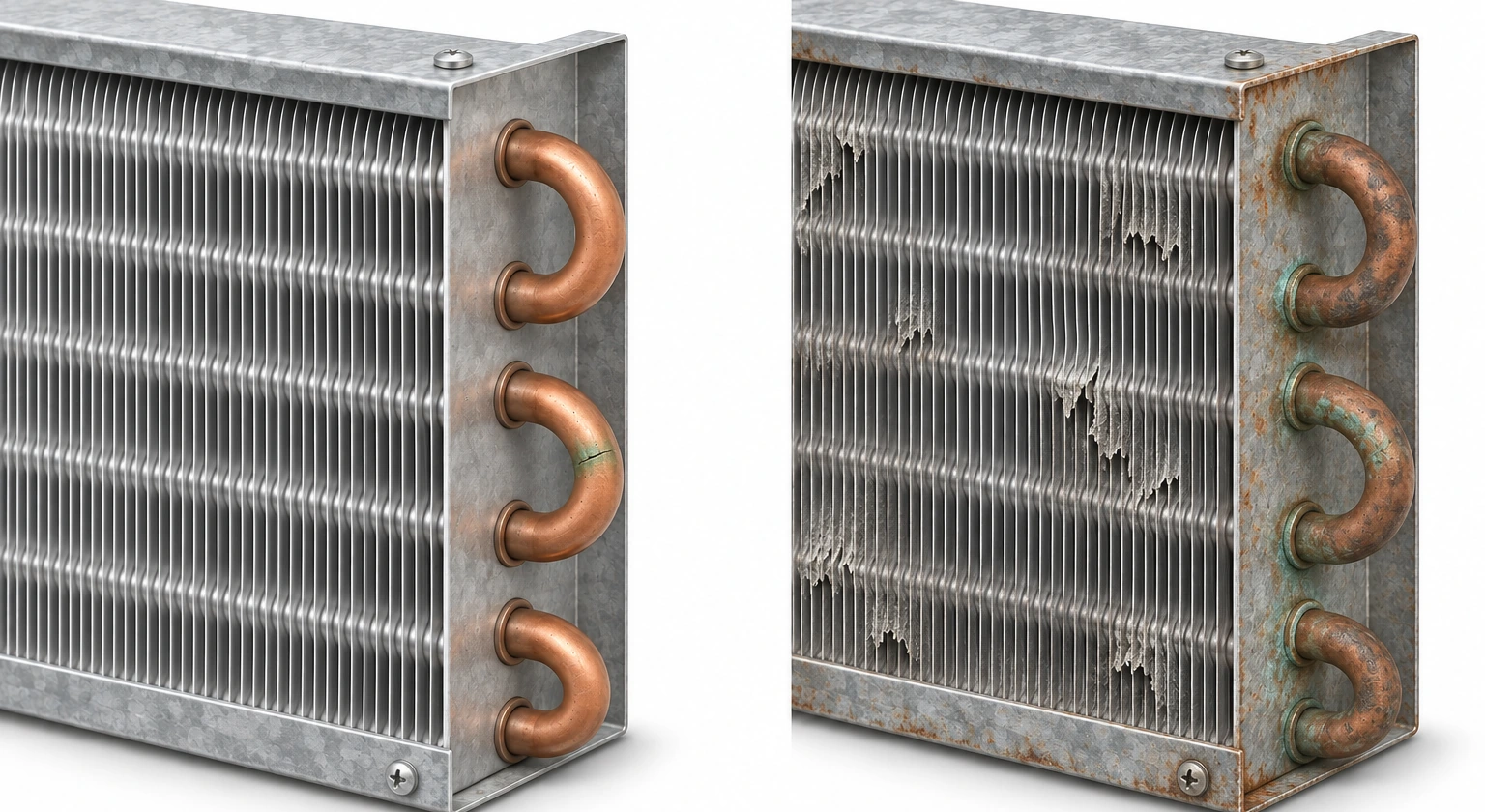
The extent and condition of the surrounding material matter. This comparison does not establish that either coil must be repaired or replaced.
Coil construction changes the repair options
A repair method that suits one coil may be unsuitable for another. Tube material, accessibility, coatings, and the location of the defect all affect the options. Refrigerant coils, water coils, and steam coils also operate in different systems, so a service team should use the instructions that apply to the actual equipment.
Microchannel coils are a good example of why blanket statements are unhelpful. Manufacturer instructions exist for repairs to certain microchannel products, but that does not establish that every microchannel coil, leak location, or type of damage can be repaired in the same way. Ask whether the proposed method is approved for the particular coil.
Compare the complete job
Compare the installed repair option with the installed replacement option. A coil’s purchase price alone leaves out work that may affect the decision considerably. Ask for comparable scopes, including access, removal and installation, applicable fluid handling, testing, delivery, and the time the equipment will be unavailable.
Keep two kinds of time separate: time waiting for the part and time performing the work. A repair may be available sooner, but difficult access can still make it disruptive. A replacement may involve a longer wait while allowing the contractor to plan the installation around an agreed shutdown.
Also establish what each quote covers if a problem returns. Ask about the repair or replacement warranty, labor coverage, and responsibility for a repeat visit. These are questions to clarify in the proposal, not assumptions to make from a headline price.
Use a percentage rule or an age cutoff only as a starting point for discussion. They cannot account for the condition of this coil, the state of the unit, access difficulties, or the consequences of another shutdown. A documented diagnosis and comparable quotes provide a better basis for the decision.
Consider the condition of the whole unit
A failed coil does not automatically require replacement of the complete air handler or rooftop unit. Coil replacement can be part of maintaining or refurbishing existing equipment. Custom replacement coils are also an option in some situations where an original part is no longer available.
At the same time, a new coil does not renew the rest of the equipment. Ask the service team to assess the casing, supports, drainage, fans, controls, and other major components before committing to a coil replacement. If substantial additional work is needed, compare the complete refurbishment plan with replacement of the unit.
For a replacement coil, both fit and suitability matter. The replacement must suit the existing equipment and its operating requirements. Physical dimensions alone do not establish that two coils will behave identically.
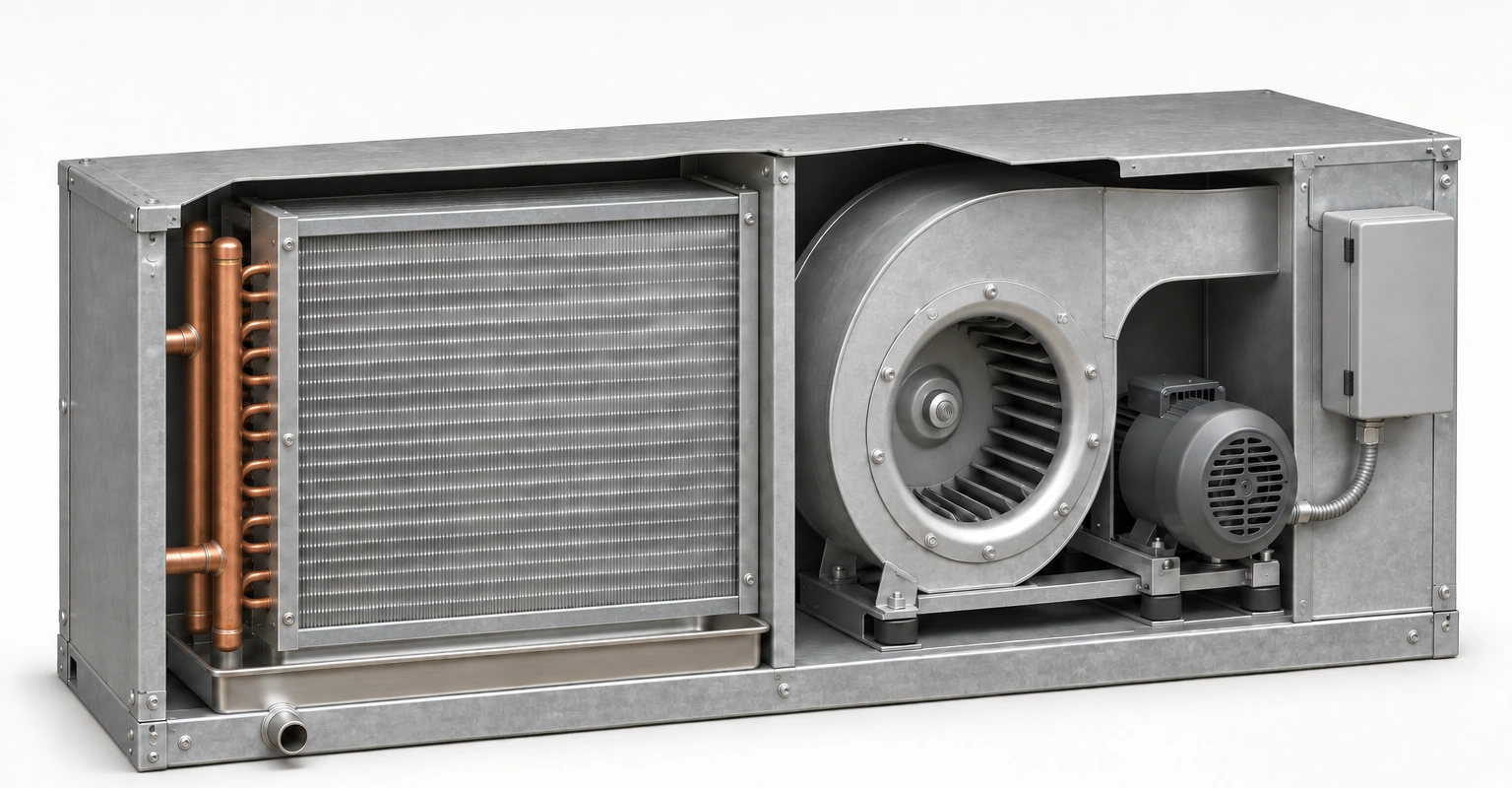
A new coil does not renew the fan, controls, drainage or cabinet. Illustrative cutaway; component arrangements vary by equipment.
Correct the cause as well as the damage
If a coil failed because of an ongoing condition, include a plan to address that condition. Otherwise, a repaired or replacement coil may face the same problem. Freeze damage calls for a review of freeze protection and operation; corrosion calls for a review of exposure, materials, and appropriate protection.
This is like replacing a tire that keeps being damaged by the same sharp edge: replacing the damaged part helps, but removing the cause is what changes the next outcome.
Questions to ask before making the decision
- What has actually failed, and how was that confirmed?
- Is the damage localized or widespread?
- Is repair suitable for this coil and this defect?
- What condition is the surrounding material in?
- What does each complete option cost, and how much downtime does it involve?
- What testing and warranty are included?
- What caused the problem, and what will prevent a repeat?
Repair is worth evaluating when a limited defect can be addressed reliably in an otherwise serviceable coil. Replacement deserves closer consideration when damage is extensive or the remaining condition makes further repairs uncertain. Decide from the diagnosis, the full scope of work, and the condition of the equipment around the coil.
Coil Recall
Review the article’s main ideas, one card at a time.
Card 1 of 7